
In this episode of Red, White & Bruised, we break down the escalating conflict between the United States and Iran, rising oil prices, and how political decisions are directly impacting gas prices and the cost of living in America. We talk about how tensions in the Middle East disrupt global oil supply, why the Strait of Hormuz matters, and how every escalation in the Iran conflict sends shockwaves through the global economy and straight into your wallet. We also discuss Donald Trump’s handling of Iran, the escalation of military action, and how foreign policy decisions turn into higher gas prices, inflation, and economic pressure for everyday Americans. If you want to understand how Iran, oil markets, geopolitics, and U.S. policy all connect, this episode explains why another Middle East conflict could mean higher prices for everything at home.
Episodes (22)

This episode asks a blunt question: when we fixate on visible figures like Peter Thiel, Elon Musk, or Bill Gates, are we actually missing the deeper network of billionaires and institutions shaping American politics?
This episode unpacks why a booming GDP often masks the struggles of small businesses and local communities. Host Ryan Haylett reveals how economic growth benefits big corporations while Main Street faces shrinking dreams and systemic neglect. Discover why the ‘strong economy’ narrative fails so many everyday Americans.
Holiday consumerism in America has basically turned into a sanctioned debt marathon—maxed-out cards, overflowing landfills, and everybody pretending they're "merry" while quietly freaking out about January. This episode breaks down who actually wins from the holiday spending spree, how much damage it does to your wallet and the planet, and how you can tap out of the madness without turning into the Grinch. There's still a way to enjoy the season, see your people, and keep your sanity—even if Santa feels more like a corporate mascot than a jolly guy with a sled.
Every president promises change, but the war machine never stops spinning. In this episode, Ryan Haylett unpacks how U.S. leaders—regardless of party—fuel endless conflict, profit, and fear. From campaign rhetoric to military contractors, discover why America’s wars never end.
Ryan Haylett dives into the complex life of Benjamin Franklin—America’s favorite polymath, relentless inventor, political disruptor, and, yes, notorious flirt. Beyond kite experiments and witty quotes, this episode unpacks Franklin’s transformation from enslaver to abolitionist, the realities behind Poor Richard’s wisdom, and tales of love and intrigue in Paris.

In this episode, Ryan explores the deepening political polarization tearing the country apart. From historic elections to echo chambers online, we break down how division shapes our politics and our lives. What’s fueling the rift—and is it fixable?

Ryan tears into the idea that America is automatically 'the best,' comparing real-world outcomes in health, life, and happiness to other nations. Expect a no-nonsense breakdown of how American exceptionalism holds the country back, and what patriotism really means when the stars and stripes are bruised.
Ryan Haylett rips into the hypocrisy and brutality baked into the U.S. passport and immigration system. With sharp humor and historical receipts, he exposes the cycle of violence, racism, and control that defines America’s borders—at home and abroad.
Ryan Haylett exposes the economic wizardry at the core of American life—fractional reserve banking, debt cycles, and the monetary system's stranglehold on democracy. This episode unpacks how money is created out of nothing, who profits, and why escaping this engineered treadmill may be the only way to restore freedom and sanity.

Ryan dives into the patchwork of Pennsylvanian identity, exploring how cities like Pittsburgh, Philly, Erie, and Scranton expose America's cultural contradictions and the myth of a singular national identity. Regional divides, economic histories, and competing loyalties take center stage in this look at the real United States—fractured, gritty, and endlessly surprising.

This episode examines the intersection of smart technology, privacy, and ethics. We discuss scenarios of technological surveillance, the relevance of the 3rd and 4th Amendments in modern law, and the trade-offs between convenience and freedom. Dive into the unsettling societal impacts of living under constant observation in the era of smart homes.
Ryan Haylett exposes how multi-level marketing companies exploit hope, patriotism, and desperation to feed a broken system. With real-world examples and tough questions, the episode unpacks MLMs’ grip on the American Dream and their corrosive impact on trust and community.
Dive into the complex interplay between nationalism and globalism, exploring how these forces shape societies, power dynamics, and individual lives. Ryan Haylett unpacks narratives of exclusion, dehumanization, and economic exploitation, while proposing a balanced approach to sovereignty and empathy.
This episode exposes how profit-driven motives have shaped America's private prison system, fueling corruption, inequality, and cycles of incarceration. Ryan Haylett breaks down the business behind bars, the human costs, and the tangled web connecting private interests to public pain.
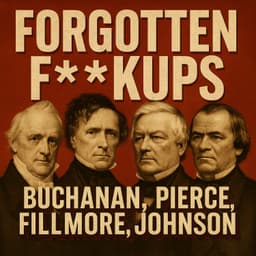
Long before Bush, Nixon, or Reagan ever stepped into the Oval Office, four lesser-known presidents laid the groundwork for some of the darkest chapters in American history. This episode takes a hard look at James Buchanan, Franklin Pierce, Millard Fillmore, and Andrew Johnson—names that history class skimmed over, but whose failures echo through generations.
We examine how Fillmore’s support of the Compromise of 1850 and the Fugitive Slave Act emboldened slaveholders and escalated tensions between North and South. Then, we dive into Pierce’s disastrous Kansas-Nebraska Act and the ensuing violence known as “Bleeding Kansas.” Both men failed to preserve peace—or take a moral stand—when the nation needed it most.
Arguably the most inept president in U.S. history, Buchanan sat idly as Southern states seceded and the country careened toward civil war. His endorsement of the Dred Scott decision and refusal to confront slavery not only deepened the divide but made conflict nearly inevitable.
After Lincoln’s assassination, Johnson—a Southern Democrat and Lincoln’s accidental VP—took the reins. His open hostility to civil rights and Reconstruction gutted the fragile progress made after the Civil War. He vetoed the Freedmen’s Bureau Act and the Civil Rights Act of 1866, and he empowered ex-Confederates to regain political control, paving the way for Jim Crow.
These men weren’t just products of their time—they were active enablers of division, violence, and regression. While history often forgets them, their legacies still shape the struggles for justice and equality in America today.
Listen as we resurrect the names no one remembers—because forgetting them is how we keep repeating the same mistakes.
🎙️ Subscribe to Red, White, & Bruised for more brutally honest takes on America’s political past, present, and future.

In this episode of Red, White & Bruised, Ryan Haylett explores the shift from democracy to technocracy, examining how tech giants and figures like Peter Thiel are reshaping power structures. From the origins of technocracy to the looming threat of technofeudalism, Ryan delves into what this means for our future and the fight to reclaim digital democracy.
Ryan Haylett dives into the explosive partnership between Palantir and the Trump administration, exposing how personal data and AI are fueling a new era of surveillance, control, and ethical controversy. With real examples and sharp analysis, this episode unpacks the expanding reach of tech giants into everyday American life.
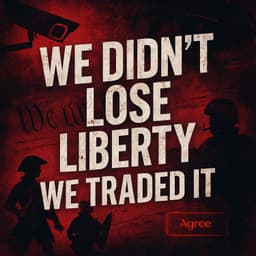
From the American Revolution to modern-day debates about digital rights and surveillance, liberty remains a defining and evolving concept. This episode examines how figures like Frederick Douglass and social justice movements have reshaped its meaning while reflecting on Ryan’s personal experiences with the tensions between historical and current freedoms.

This episode examines a dystopian scenario involving surveillance, government power, and the erosion of liberties. We connect fears of authoritarianism to the Founders' vision behind the Second and Fifth Amendments, exploring historical and modern anxieties about state control. With perspectives on gun rights, personal freedom, and global security policies, this discussion highlights the cultural and ideological complexities of safeguarding democracy.
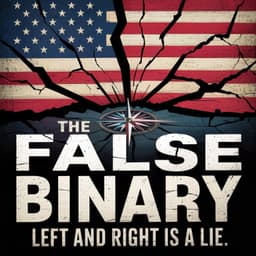
This episode examines the historical roots of the left/right political divide, tracing its origins to the French Revolution and its transformation into rigid ideological categories. We critique how media and social media exacerbate polarization while highlighting figures like Malcolm X and Dwight D. Eisenhower, whose ideas transcend simple labels. Discover alternative frameworks for understanding political identities and building cross-ideological coalitions.
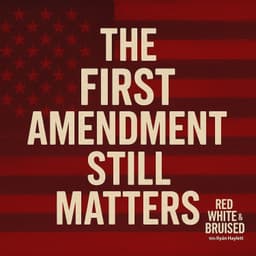
This episode explores the philosophical roots and enduring legacy of the First Amendment. From Jefferson's "wall of separation" metaphor to Franklin's warnings about media misuse, we examine how these foundational ideas resonate with today's debates on free speech, digital expression, and misinformation. Join us as we look at pivotal moments and modern controversies shaping these freedoms.